Is Owning a Tesla Robo Taxi Profitable? Let’s Break It Down
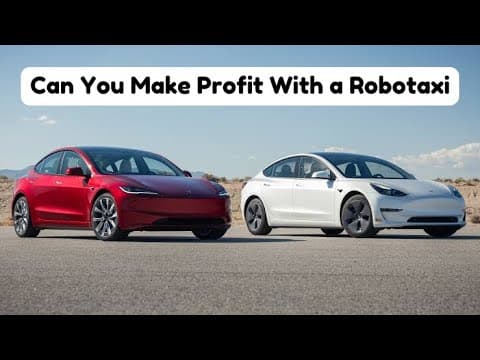
Hey everyone, DennisCW here! Today, I’m diving into a question that’s been buzzing in the Tesla community: Can you actually make a profit by turning your Tesla Model Y into a robo taxi? With Tesla's ambitious plans for autonomous driving and the upcoming CyberCab, this idea is gaining traction. I came across an interesting analysis by Test Calendar that crunches the numbers, and I want to share my thoughts on whether this could be a viable side hustle or investment. Let’s get into the details!
The Numbers Behind Tesla Robo Taxi Profitability
According to Test Calendar’s calculations, if you own a Tesla Model Y and use it as a robo taxi on Tesla’s network, here’s how the math shakes out:
- Vehicle Cost: The base price for the cheapest Model Y is around $46,630.
- Insurance: Estimated at $300 per month for commercial use, which seems reasonable.
- Daily Costs: Total daily operating cost comes to about $69.
- Daily Income: Estimated revenue from fares is around $118 per day.
- Daily Profit: After Tesla’s network fees (assuming they don’t charge initially), you’re left with a profit of approximately $49 per day.
Based on these figures, it would take 9,499 days—or roughly 3 years of continuous use—and a staggering 378,000 miles to make your Model Y profitable as a robo taxi. That’s a long time and a lot of wear and tear on your vehicle!
Challenges and Considerations
While the idea of a passive income stream from a robo taxi sounds appealing, there are several logistical hurdles to consider (though I’ll set those aside for now). Here are some key points to think about:
- Vehicle Wear and Tear: Driving 378,000 miles is no small feat. Even with Tesla’s long battery warranty (up to 120,000–150,000 miles for most models like the Model S, X, and Cybertruck), you’re pushing way beyond that limit. Repairs and maintenance could eat into your profits.
- Battery Efficiency and Costs: While Tesla vehicles are known for their durability, the constant use as a robo taxi could degrade the battery faster than expected, leading to costly replacements.
- Personal Experience with Rentals: I’ve rented out my Model 3 and Model Y on platforms like Turo, and let me tell you, it’s not always smooth sailing. While a robo taxi isn’t the same as handing over your keys to a stranger, the wear and tear from constant use is a real concern.
Maybe using your Tesla as a robo taxi on weekends or sporadically could make sense, but full-time use seems like a risky bet for now.
Could the CyberCab Be a Game-Changer?
Speaking of new developments, Tesla’s VP Lars recently shared an exciting update about the CyberCab. Production gears are already being installed at Giga Texas, with the first prototypes expected this summer. They’re targeting mass production by 2026, with impressive specs like 10 kilometers per kilowatt-hour efficiency and a 50 kWh battery.
The CyberCab could potentially be a more viable option for a robo taxi fleet due to its lower cost and higher efficiency. It might just be the vehicle that makes this concept profitable. Until then, I’d strongly advise against leasing a Model Y specifically for this purpose—it’s not yet clear if the numbers will pencil out.
Alternative Use Case: Family Convenience
While profitability as a full-time robo taxi might be questionable right now, I do see immense value in Tesla’s autonomous tech for family use. Imagine one vehicle seamlessly picking up and dropping off family members for school, practice, or errands without anyone needing to drive. That kind of convenience could be worth more than the potential profits from a robo taxi gig.
Final Thoughts on Robo Taxi Profitability
At the end of the day, the idea of turning your Tesla into a money-making robo taxi is exciting, but the current numbers suggest it’s a long road to profitability—literally. We’ll need to wait for more details on Tesla’s network fees, real-world wear and tear data, and the rollout of vehicles like the CyberCab to see if this becomes a feasible side hustle. For now, if you’re thinking of buying a Tesla just for this purpose, I’d say hold off and wait for the math to make more sense.
What do you think? Would you turn your Tesla into a robo taxi if the opportunity arises? Drop your thoughts in the comments below—I’d love to hear your take!
Bonus: Must-Have Tesla Accessories
Congrats if you’ve recently bought a Tesla or are about to! Now, let’s talk about the fun part: accessories. There are tons of options out there, but I’ve narrowed it down to my top three recommendations:
- All-Weather Floor Mats: My number one pick! They protect your Tesla’s interior from dirt, spills, and wear. I’ve got options for every budget—good (Amazon basics), better (Tasmanian), and best (3W Liners, my personal favorite on our Model X and Model 3 Performance). Use my promo code in the description for a great deal on 3W Liners!
- Phone Mounts: Keep your phone secure and accessible while driving.
- Center Console Organizers: Tesla doesn’t come with a built-in center console organizer, so this is a must-have. I use one from Jowua on all our Teslas—link below!
Check out my full list of recommended accessories and discount codes in the description or on page two of our Best Deals Spreadsheet. Thanks to everyone who uses my links to support the channel—it means a lot!
What’s Next?
Stay tuned for more updates on Tesla’s robo taxi network and CyberCab developments. I’ll keep crunching the numbers and sharing my thoughts as new info drops. Until then, let me know what topics you’d like me to cover next!
Thanks for reading, and I’ll catch you in the next post!
-DennisCW