The Truth About Used Tesla Prices: Debunking the Myths and Finding the Best Deals
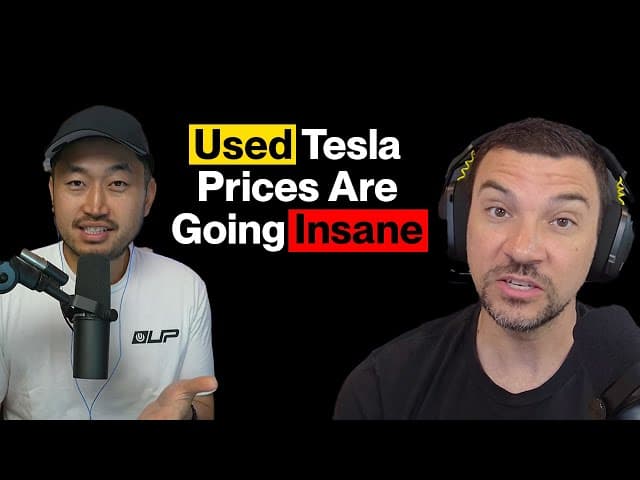
Hey everyone, it's Dennis from DennisCW, your go-to source for no-fluff advice on electric vehicles. If you've watched my latest video episode of The Breakdown (Episode 4), you know we dove deep into the wild world of used Tesla prices. There's a lot of chatter out there about prices skyrocketing or crashing—spoiler: it's more nuanced than you think. In this blog post, I'll break it all down based on the discussion with my co-host Chip, sharing insights on market trends, buying tips, and what you need to watch out for. Let's get into it!
Why Used Tesla Prices Are a Hot Topic Right Now
The used car market for Teslas has been anything but predictable. Recently, we've seen headlines about tariffs, supply chain issues, and economic shifts, but what's really happening on the ground? Chip and I debated this in the episode, and from what we're seeing, used Tesla prices are actually trending downward. For instance, we're tracking the Manheim Market Report (MMR) for a 2018 Model 3 Long Range, and it dropped from over $20,000 last week to about $19,450—a solid 5% decrease. That's not just a fluke; it's happening across the board.
This downward trend is influenced by factors like increased competition in the EV space, more new Teslas flooding the market, and even the refreshed Model Y putting pressure on used prices. During COVID, it was a different story—prices were insane, with people buying new Teslas and flipping them for break-even after six months. But today, with more options and cautious buyers, that frenzy is over. People are holding off on purchases, making smarter decisions, and that means better deals for you if you're in the market.
Buying Used Teslas: Tesla.com vs. Third-Party Dealers
One question I get all the time is whether to buy from Tesla.com or a third-party dealer like the ones Chip works with. Let's weigh the pros and cons. Buying directly from Tesla gives you a bit of warranty peace of mind—typically a few thousand dollars in value—but you're paying a premium. For example, you might see a used Model 3 listed on Tesla's site for $1,000 to $2,000 more than what you'd find elsewhere.
On the flip side, third-party dealers are aggressive with pricing to move volume. Chip mentioned that his listings are often $1,000 to $2,000 less than Tesla's, and you still get solid cars without the markup. However, be cautious: some Tesla.com listings use generic stock photos, which can make it hard to know exactly what you're getting. If you're all about that extended warranty and direct manufacturer vibe, go for Tesla.com. Otherwise, third-party might save you cash—but always inspect the car first.
The Impact of Tax Credits and Economic Factors
Don't overlook the $4,000 used EV tax credit—it's a game-changer. This isn't just a discount; it's like cash down that can help you get approved for financing. Chip shared how he structures deals where the credit knocks off the bottom line, making a $24,000 car even more attractive to banks. But with talk of the credit potentially disappearing, now's the time to act if you're eligible.
Tariffs are another wild card. We discussed how Ford's sudden employee pricing for everyone raises eyebrows—do they have that much margin to absorb a 25% hit? It's confusing, but from our perspective, it's not translating to higher used prices. In fact, demand for other EV brands is down, and auctions are showing lower bids. This all points to a buyer's market, especially for Teslas.
Model-by-Model Recommendations for Used Teslas
If you're eyeing a specific model, here's the lowdown based on our experience:
- Model 3: The sweet spot is the 2020 models. They're reliable, packed with features, and often under $25,000 with the tax credit. Avoid the 2021s if possible due to higher battery failure rates, and steer clear of rental cars—check Carfax or AutoCheck to spot them.
- Model Y: Go for the 2021s with the updated console and dual-pane glass. A 2021 Long Range with 40,000-50,000 miles can be had for $26,000 to $28,000—unbeatable compared to competitors like the Honda Pilot. It's great for families with two kids, but if you need more space, you might outgrow it quickly.
- Model S and Model X: Focus on the refreshed 2021-2022 models to avoid wear and tear on older ones. These can be pricey, but if you find one around $50,000, it's like getting a near-new luxury EV. Watch for common issues like front axle wear or door handles, but overall, they're solid.
Full Self-Driving (FSD) adds value—about $1,000 to $2,000 for Model 3 or Y—but is it worth it? Personally, I'd skip it on older models. The latest tech in new vehicles is miles ahead, so test it via the subscription first before committing.
Pro Tips for Buying and Selling Used Teslas
Buying or selling a used Tesla? Here are some must-know tips:
- Selling Your Tesla: Start with offers from CarMax or Carvana for a quick, data-driven quote. Then, compare with local dealers or specialty stores. If you're selling due to personal reasons (like Elon fatigue—yes, that's a thing), make sure you're educated on market value to get the best deal.
- Avoiding Scams: Stay away from private sales on platforms like Facebook Marketplace if you're not experienced. Scammers are everywhere, offering fake checks or titles. Instead, opt for a pre-purchase inspection—Chip charges $249 for a thorough check, including Carfax and title verification.
- Pro Tip of the Week: When adding accessories, don't overdo it on storage for Sentry Mode videos. A 1-2 GB thumb drive is plenty—you can always reset it.
- Hot Take on Financing: Shop around for rates! Local banks or credit unions might offer better deals than dealers. We saw a 5.99% APR recently, which beats the standard 6.74%.
Wrapping It Up: Your Next Steps in the EV World
The used Tesla market is full of opportunities right now, but it pays to be informed and cautious. Prices are trending down, tax credits are a huge boost, and with the right research, you can snag an amazing deal. Remember, it's not just about the car—it's about making a smart investment that fits your lifestyle.
If you have questions or want to share your experiences, drop a comment below or hit the link in my video description to send in your feedback for future episodes. We're covering pre-purchase inspections next, so stay tuned. Thanks for reading, and I'll see you in the next one—drive safe and go electric!
This blog post is based on Episode 4 of The Breakdown podcast. For more EV tips, subscribe to DennisCW on YouTube and check out our partner, Amber, for affordable Tesla repair coverage.