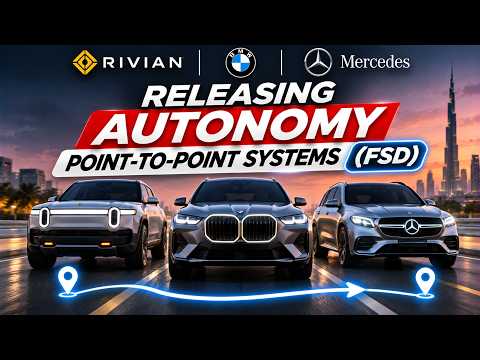
The autonomy race just turned into a full-on sprint with Rivian, BMW, and Mercedes all pushing point-to-point systems that directly challenge Tesla FSD.
Mercedes already unveiled its point-to-point autonomy package, complete with intersection turns, traffic light stops, lane changes, and highway exits. The system is slated for 2027 rollout in the US, and early test footage shows it operating in San Francisco-like conditions. BMW followed with a slick two-minute BMW address to address demo that proves the hardware can handle end-to-end trips without constant driver input.
Rivian is next. Their Autonomy Day drops December 9, and I own an R2, so I’m genuinely curious how their software stacks up. I’ve already compared Rivian’s early autonomy work to Tesla in detail over at this post.
What this means for Tesla owners
Competition is healthy. The real question becomes which system ends up being the least annoying in daily use. Will Tesla still be the one constantly nagging you to watch the screen, or will the new players deliver smoother hands-free driving from address to address? Rivian BMW Mercedes autonomy FSD efforts are forcing everyone to raise their game.
I plan to test each one once they reach customers. Until then, the gap between today’s supervised systems and true unsupervised autonomy is shrinking fast.
If you’re thinking about switching vehicles while these features mature, Plug Motors — get an instant offer to sell your Tesla or EV can give you a strong offer on your current EV.
Bottom line
Tesla FSD competition just got serious. Mercedes point-to-point autonomy and BMW address to address demo show the field is catching up, and Rivian Autonomy Day could shift the conversation again. I’ll keep testing and reporting as the systems go live.