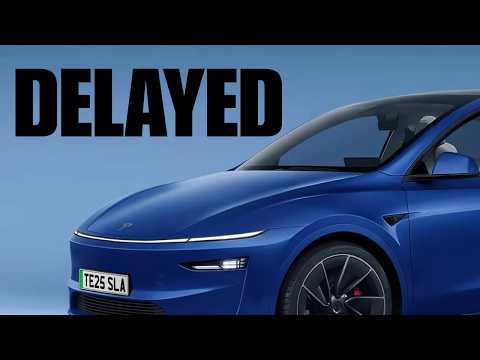
A 2025 Model Y dropped to 88% battery health after just 18 months and 13,000 miles, triggering an "unacceptable" result on Tesla's own battery health test.
That kind of Tesla Model Y battery degradation at such low mileage raises eyebrows, especially when the car only shows 302 miles at full charge instead of the original 338. The owner called it out publicly, and the numbers line up with roughly 12% range loss in under two years.
What the Data Actually Shows
The car in question is a low-mileage 2025 Model Y that lost 36 miles of displayed range. Tesla's service test flagged it because the pack had fallen below the typical early-life curve most owners expect. Other owners report similar 10-15% drops after four years and 50,000 miles, so this particular case sits on the faster side for low mileage Tesla battery loss.
I ran the numbers against the Model Y range loss warranty. Tesla covers the high-voltage battery if it falls below 70% capacity within eight years or 100,000 miles. A 12% loss stays well inside that threshold, which is why most people shouldn't panic yet.
Why Early Degradation Happens
Batteries lose capacity fastest in the first 10-20% of their life. It's similar to how a new car loses value the moment you drive it off the lot. Calendar aging, temperature cycles, and initial formation all play a role. The question is whether this 2025 Model Y 12% degradation is an outlier or simply the new normal for some packs.
I don't think supercharging is the main culprit here. Plenty of owners charge daily at home and still see comparable early losses. If you're curious about the real impact of DC fast charging, I covered it in detail here.
Counterarguments Worth Considering
Some owners will point out that their 2024 or 2025 Model Ys are holding 95%+ after similar time frames. That's true. Battery variance exists between individual packs, software versions, and even manufacturing batches. One car hitting 12% quickly doesn't mean every 2025 Model Y will follow the same path.
At the same time, dismissing the result entirely feels dismissive. When Tesla's own diagnostic labels the health "unacceptable," it deserves attention even if the warranty hasn't kicked in.
My Take After Looking at the Numbers
Twelve percent loss in 18 months on a low-mileage car isn't ideal, but it also isn't a warranty claim yet. The Model Y range loss warranty gives owners a solid safety net at the 30% mark. Most packs will never reach that threshold within the coverage period.
If you're shopping for a used or new Tesla, I'd still recommend running a Tesla battery health test at delivery and again at the one-year mark. Simple full-charge range checks give you a baseline without needing the full service procedure.
Accessories That Actually Matter
After you take delivery, the real fun begins with accessories. My top three recommendations haven't changed: a solid phone mount, an upgraded center console, and all-weather floor mats.
For floor protection, 3W all-weather floor mats — 35% off with code DENNIS35 remain my daily choice on both our Model X and Model 3 Performance. They fit precisely and hold up better than most Amazon options.
For the console and mounts, Jowua Tesla accessories — phone mounts, center consoles, and more deliver the cleanest integration. Tesla skips a proper center console, so adding one transforms daily usability.
This 2025 Model Y case is a reminder that battery health isn't perfectly predictable, but the warranty and real-world data still point to long-term reliability for most owners.
Some links are affiliate links that support the channel at no cost to you.